
Enhancing Hospitality Efficiency with Service Robots
- Kristaps Šūpols
- Jan 18
- 4 min read

The hospitality industry is undergoing a transformation, driven by the integration of technology into everyday operations. One of the most exciting developments in this space is the use of service robots. These innovative machines are not just a novelty; they are becoming essential tools that enhance efficiency, improve customer service, and streamline operations. In this blog post, we will explore how service robots are reshaping the hospitality landscape, the benefits they bring, and real-world examples of their implementation.
Understanding Service Robots in Hospitality
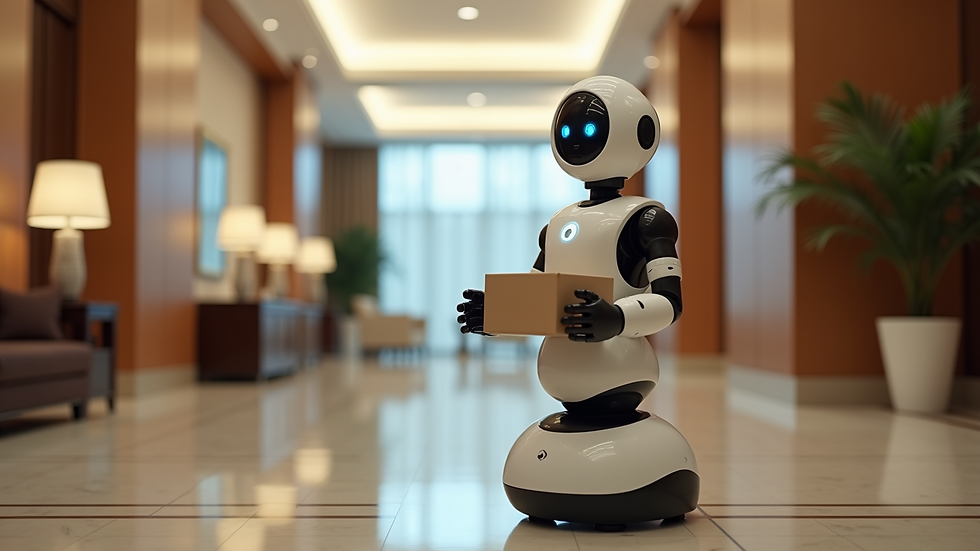
Service robots are automated machines designed to assist with various tasks in the hospitality sector. They can perform a range of functions, from delivering room service to providing information at the front desk. These robots are equipped with advanced technologies, including artificial intelligence (AI), machine learning, and sensors, allowing them to navigate complex environments and interact with guests.
Types of Service Robots
Delivery Robots
These robots transport items such as food, beverages, and toiletries directly to guests' rooms. They can navigate through hallways and elevators, ensuring timely delivery without human intervention.
Concierge Robots
Acting as virtual assistants, concierge robots provide information about hotel amenities, local attractions, and dining options. They can answer questions and guide guests, enhancing their overall experience.
Cleaning Robots
These robots automate cleaning tasks, such as vacuuming and mopping, allowing staff to focus on more personalized guest interactions.
Check-in and Check-out Robots
Some hotels have implemented robots that assist with the check-in and check-out processes, reducing wait times and improving efficiency.
Benefits of Service Robots in Hospitality
The integration of service robots in hospitality offers numerous advantages that can significantly enhance operational efficiency and guest satisfaction.
Improved Efficiency
Service robots can operate 24/7 without breaks, allowing hotels to maintain high levels of service at all times. This continuous operation can lead to faster response times for guest requests and a smoother overall experience.
Cost Savings
While the initial investment in service robots may be substantial, the long-term savings can be significant. By automating routine tasks, hotels can reduce labor costs and allocate staff to more critical areas, such as guest relations.
Enhanced Guest Experience
Guests appreciate the novelty and convenience of interacting with robots. Whether it's a robot delivering a meal or providing information, these interactions can create memorable experiences that enhance guest satisfaction.
Consistency in Service
Service robots provide consistent service quality, ensuring that every guest receives the same level of attention and care. This consistency can help build a hotel's reputation for reliability and excellence.
Real-World Examples of Service Robots in Action
Several hotels around the world have successfully integrated service robots into their operations, showcasing the potential of this technology.
The Henn-na Hotel, Japan
The Henn-na Hotel, known as the "Robot Hotel," is one of the first establishments to fully embrace service robots. From check-in to room service, robots handle various tasks, including a dinosaur-shaped robot that greets guests at the front desk. This unique approach has garnered international attention and set a benchmark for innovation in hospitality.
Aloft Hotels
Aloft Hotels have introduced a robot named "Botlr," which delivers amenities to guests' rooms. Botlr can navigate the hotel autonomously, using elevators and avoiding obstacles. This initiative has not only improved efficiency but also added a fun element to the guest experience.
Hilton Hotels
Hilton has experimented with service robots in several locations, including the use of robots for room service delivery. This initiative has proven successful in enhancing guest satisfaction while allowing staff to focus on more personalized service.
Challenges and Considerations
While the benefits of service robots are clear, there are also challenges that hotels must consider before implementation.
Initial Investment
The cost of purchasing and maintaining service robots can be high. Hotels need to assess whether the potential savings and efficiency gains justify the initial expenditure.
Staff Training
Integrating robots into the workforce requires training for existing staff. Employees must learn how to interact with robots and understand their capabilities to maximize their effectiveness.
Guest Acceptance
Not all guests may be comfortable interacting with robots. Hotels should consider their target demographic and ensure that the introduction of robots aligns with guest preferences.
The Future of Service Robots in Hospitality
As technology continues to advance, the capabilities of service robots will only improve. Future developments may include enhanced AI for better guest interaction, improved navigation systems, and even robots that can perform more complex tasks.
Personalization
Future service robots may be equipped with AI that allows them to learn guest preferences over time, providing a more personalized experience. For example, a robot could remember a guest's favorite drink or preferred room temperature, enhancing the overall stay.
Integration with Smart Technology
As hotels adopt more smart technology, service robots will likely integrate seamlessly with other systems, such as mobile apps and smart room features. This integration can create a cohesive experience for guests, allowing them to interact with both robots and their environment effortlessly.
Conclusion
Service robots are not just a trend; they represent a significant shift in how the hospitality industry operates. By enhancing efficiency, reducing costs, and improving guest experiences, these robots are becoming invaluable assets for hotels. As technology continues to evolve, the potential for service robots in hospitality is limitless. Hotels that embrace this innovation will not only stay competitive but also set new standards for guest service.
The future of hospitality is here, and it is robotic. Are you ready to welcome service robots into your establishment?


Comments